Table of Contents
ToggleHorror movies are often viewed as mere entertainment—an escape from reality. But for many, including the fans of The Monster Squad, horror means much more. In our recent two-part episode with actor Andre Gower, best known for his role in The Monster Squad and director of the documentary Wolfman’s Got Nards, we explored how horror acts as a powerful tool for healing and building connections, even in unexpected ways. From sharing life stories at horror conventions to addressing trauma through the lens of scary movies, Andre’s journey offers insight into the cathartic nature of horror fandom.
Monster Mania: The Origins of Horror Heals
The concept for Horror Heals was born out of a moment Corey Stulce witnessed at Monster Mania, a horror convention, where a young man, visibly anxious and possibly on the autism spectrum, found peace in a brief conversation with a fellow fan about Sam Raimi’s film The Gift. The transformation was instant—the man went from nervous and uncomfortable to calm and engaged, purely through the shared love of a horror film.
Corey recalled, “That was the moment I thought: Horror heals.”
Andre Gower echoes this sentiment throughout our conversation, as he describes numerous encounters with fans who found solace in The Monster Squad. He recounts a story about a father with a severely autistic son who would often throw fits—except when The Monster Squad was playing. For those 90 minutes, the child would be silent, focused, and calm. That hour and a half became a brief window of peace for the family, a time to breathe, and it all came from their son’s connection with a horror film.
Shared Experience: The Magic of Horror Conventions
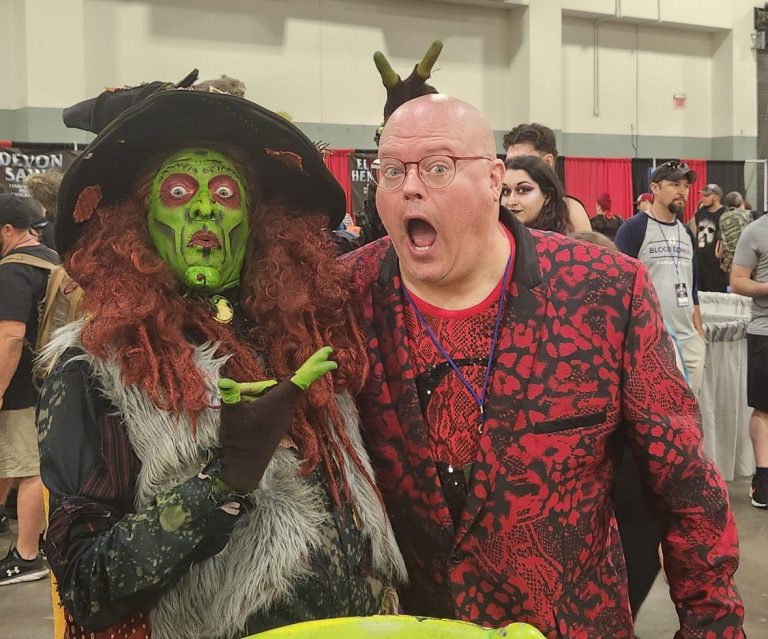
At the heart of Horror Heals is the community it builds—fans who, like Andre and Corey, attend horror conventions not just to meet their favorite actors but to connect with others. Andre Gower shared his experiences from various conventions, describing them as more than just fan gatherings. They are, in his words, “family reunions.”
He reflected on how fans from different walks of life—some on the autism spectrum, some with Down syndrome—connect deeply with these films. The conventions provide a safe space, where the love of horror acts as a common ground. People who might otherwise feel out of place or uncomfortable in crowded spaces come together in the shared experience of horror.
Andre Gower discussed how this connection is not limited to The Monster Squad, but extends across the genre. He emphasized the idea of horror fans being “all on the same team.” Unlike fandoms that can become divisive, horror fans are united in their love for the genre. Whether it’s Freddy Krueger or Jason Voorhees, The Ring or The Babadook, horror fans know they are part of a larger, accepting community.
The Final Girl and the Power of Survival
A key theme that emerged in our conversation with Andre Gower was the celebration of survival, often symbolized by the “final girl” trope in horror films. The final girl is the one who makes it out alive, the hero who defeats evil and survives the ordeal. Andre compared this to the core of human resilience. In many ways, horror is about survival—the fight to overcome trauma, to battle through adversity, and to come out the other side.
“We all hope we’d be the final girl, that we’d make it through,” Andre said, tapping into the universal desire for survival. Horror films allow us to experience fear in a controlled environment and celebrate the fact that we’ve made it through, even if only vicariously through the characters on screen.
This archetype of survival ties directly into the therapeutic power of horror. As Andre Gower puts it, horror movies give fans an “anchor”—a way to work through their own personal fears and traumas in a safe, shared space. Whether they’re battling the monsters on screen or the real-life horrors of mental health struggles, financial insecurity, or family trauma, horror offers a release, a way to process these emotions.
Andre Gower Sees Horror as Catharsis
At the heart of the discussion was the idea that horror, like any form of art, is a form of catharsis. Andre Gower discussed how watching horror films allows people to confront their fears in a way that is safe and even empowering. Much like how riding a roller coaster provides a thrill in a controlled environment, horror movies let us face fear, anxiety, and danger without real-world consequences.
“I think horror is a catharsis, and it’s healthy. It’s not damaging. People think horror movies are damaging because they’re scary, but that’s the point!” Andre explained.
Many fans have experienced real-life horrors—trauma, loss, grief—and find comfort in the genre’s ability to reflect and navigate those feelings. By confronting fictional horrors, they feel empowered to deal with real-life struggles.
The Healing Power of Horror: More Than Entertainment
Horror conventions, movies, and fandoms have become more than entertainment—they are lifelines for some. As Andre mentioned, many of the people who approach him at conventions have personal stories about how horror films, especially The Monster Squad, helped them through tough times.
Some fans grew up feeling out of place or misunderstood, and horror films gave them a sense of belonging. For others, like the father with the autistic son, horror offered peace, a temporary respite from the challenges of everyday life.
The genre, often maligned for its blood and gore, can be a place of healing, offering fans an outlet for processing fear, trauma, and grief.
If you have a story of how horror has helped you, we’d love to hear it! Email us at horrorhealspodcast@gmail.com and share your experiences. Remember, when someone questions if horror is good for our mental health, tell them, “Of corpse it is.”