Table of Contents
ToggleFear is one of humanity’s most primal emotions, hardwired into our brains to keep us safe. But what happens when fear is experienced not as a threat, but as entertainment? In a special two-part series on the Horror Heals podcast, Corey and Kendall explore the science of fear with researchers Mathias Clasen and Marc Malmdorf Andersen from Aarhus University’s Recreational Fear Lab.
This conversation unpacks the psychology of fear, how it improves mental wellness, and the surprising ways horror builds community and resilience. If you’ve ever wondered why we love to be scared—or how horror helps us thrive—this is your guide to understanding the science of fear.
The Science of Fear: Why We’re Drawn to Horror
At its core, fear is a survival mechanism. It alerts us to danger and prepares us to fight or flee. But according to Mathias Clasen, co-director of the Recreational Fear Lab, fear also has a playful side.
“People love experiencing fear in controlled environments, like horror movies or haunted houses,” Mathias explains. “It’s a safe way to explore this powerful emotion and even have fun with it.”
This concept, known as recreational fear, has been the focus of numerous studies at the Recreational Fear Lab. Research shows that engaging with fear in a safe space helps people regulate emotions, manage stress, and build resilience.
Marc Malmdorf Andersen, an expert in cognitive science, adds that curiosity plays a big role in our attraction to fear. “Horror satisfies our craving for novelty and excitement,” he says. “It allows us to step outside our comfort zones while still feeling safe.”
How Horror Taps Into the Science of Fear
The Horror Heals podcast reveals how horror goes beyond entertainment to offer real psychological benefits. Mathias and Marc highlight several key findings from their work at the Recreational Fear Lab:
Fear Builds Resilience: Watching horror movies can train your brain to handle fear in real life. During the COVID-19 pandemic, for instance, horror fans exhibited fewer stress symptoms and better emotional coping skills than non-fans.
Fear Improves Emotional Regulation: Experiencing fear in a controlled setting—like a haunted house—helps people practice managing strong emotions, which translates to better emotional health.
Fear Provides Catharsis: Horror offers a release for pent-up stress, allowing viewers to channel their anxieties into the safe confines of a fictional story.
“Horror acts like a playground for the mind,” Mathias explains. “It’s where we learn how to navigate fear without real-world consequences.”
Horror as a Community Builder
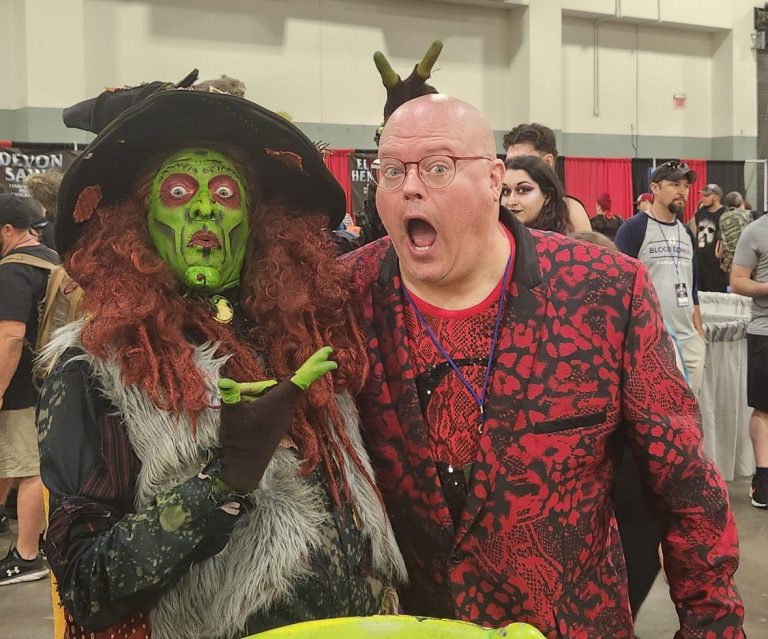
One of the most surprising aspects of horror culture is its ability to bring people together. Corey and Kendall highlight the inclusive and welcoming nature of horror conventions, where fans of all ages connect over their shared love of the genre.
“Horror fans are some of the nicest people you’ll ever meet,” Corey says. “At conventions, you see everyone from kids in cosplay to grandmas who love zombie movies. There’s a sense of belonging that’s hard to find anywhere else.”
Marc agrees, noting that horror fandom often fosters strong social bonds. The genre celebrates outsiders and underdogs, making it a safe haven for people who feel marginalized in other spaces.
The Healing Power of Fear
The podcast also touches on how fear can be a therapeutic tool. For Corey and Kendall, horror movies are an escape from the stresses of daily life. “When I watch a horror movie, I’m not thinking about work or anxiety,” Corey says. “I’m just focused on the story.”
The science backs this up. Studies from the Recreational Fear Lab show that horror can help people with anxiety by providing a controlled environment to confront their fears.
“Horror gives fear a clear endpoint,” Marc explains. “Unlike anxiety, which feels vague and endless, fear in horror movies has a resolution. You can experience it, process it, and move on.”
Key Takeaways from the Science of Fear
Fear is a Tool, Not Just a Threat: The science of fear shows that we can engage with fear constructively to build resilience and manage emotions.
Horror Fans Are Resilient: Regular exposure to horror strengthens emotional regulation and coping skills.
Fear Builds Connections: From conventions to online communities, horror fans create inclusive spaces that foster belonging and friendship.
Horror Has a Moral Framework: Many horror stories emphasize teamwork, empathy, and survival, inspiring viewers to face their challenges.
The Future of Fear Research
As Mathias and Marc continue their groundbreaking studies at the Recreational Fear Lab, Corey and Kendall are committed to exploring the science of fear on the Horror Heals podcast. Future episodes promise even more insights into how horror shapes our minds, cultures, and communities.
Whether you’re a lifelong fan or just curious about the genre, horror offers a powerful lens through which to understand ourselves—and the world around us.
Conclusion
The science of fear is clear: horror isn’t just entertainment—it’s a tool for growth, healing, and connection. By engaging with fear in safe spaces, we learn more about ourselves and build stronger emotional and social foundations.